Bali 2026: how the property market is professionalising — and what it means for buyers
Bali entered 2026 as a market that is changing character. Tourism is at a record high, supply growth has slowed, and — most importantly — the rules are tightening. From March 2026 every short-term rental on the island has to prove full legal compliance. This is a market that is professionalising, and that shift decides who works here in five years and who does not. Below: what the data says, what it means, and where Alex Villas Group stands in it.
The Bali market in 2026: what the data says
According to the Bali Hotel & Branded Residences 2026 report by Horwath HTL and C9 Hotelworks (March 2026):
International arrivals in 2025 reached a new record, exceeding the pre-pandemic 2019 peak.
Island-wide hotel occupancy held at 74% — historically strong, after two years of explosive rebound.
The tracked hotel pipeline stands at 5,641 rooms and grew only marginally year on year: supply growth is measured, not runaway.
Demand is diversified rather than dependent on one country: Asia excluding ASEAN and Oceania contribute roughly 28% of international arrivals each, Europe 27%.
Bali remains Indonesia's primary tourism engine, with no domestic destination rivalling its scale or connectivity.
The report's own summary of 2025 is precise: the market has shifted from recovery to resilience. Not a boom — a normalisation at a high level.
Where new development is moving
More than seventy hospitality-managed developments are actively on sale in Bali. Canggu and Berawa still account for around 40% of that supply and Uluwatu for 21% — but land constraints and rising density there are pushing new projects along the north-west coastline: Seseh, Pererenan, Nyanyi. That emerging cluster is already about 17% of total supply.
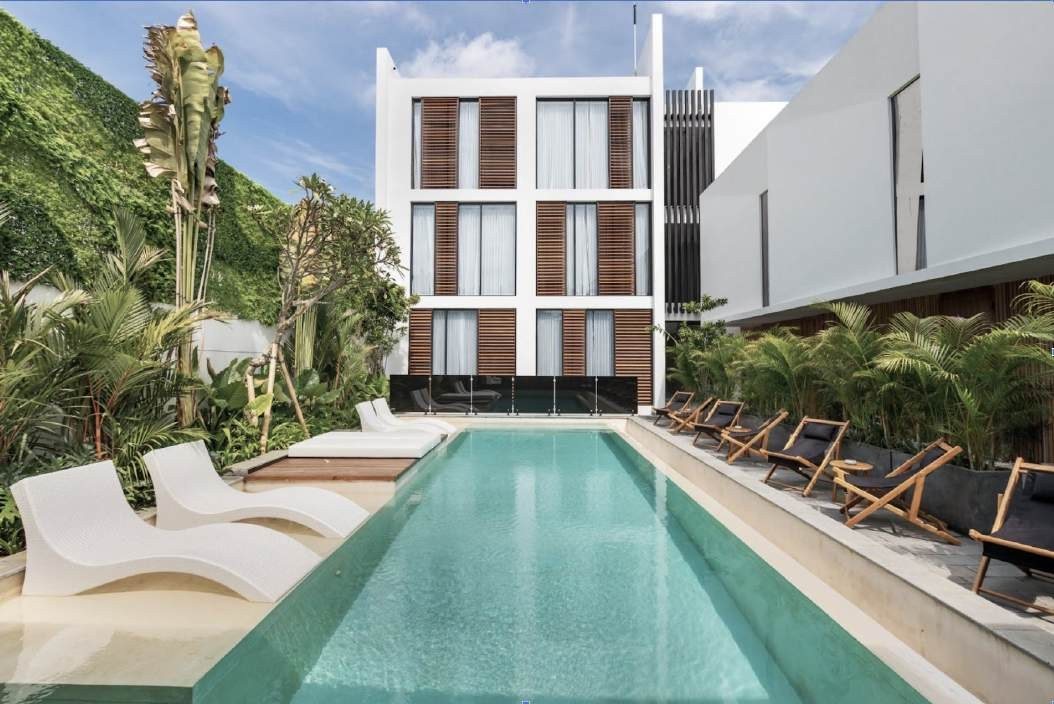
Alex Villas Group has been building in exactly this corridor for years — Canggu, Pererenan and the premium south of Bukit — which is now where the market itself is heading.
The regulatory turn — the most important change of 2026
Bali's market has historically been dominated by small operators. Roughly 84% of developments on sale consist of fewer than thirty villas, and that fragmentation created regulatory gaps. The provincial government is now closing them.
The core requirement: by 31 March 2026 every short-term rental must demonstrate full legal compliance. Listings on booking platforms that cannot verify their business registration through the national digital framework face removal. Hotels are held to the same standard. At the same time, individual foreign buyers can no longer directly hold the tourism operating licences that short-term rental requires — that has to sit inside an Indonesian corporate structure.
This is not a restriction on the rental business. It is a levelling of the field: tax compliance, standardised safety, and parity between hotels and private rentals. And it changes who can operate.
What it means in practice
The consultancy's forecast is straightforward: demand shifts toward professionally and legally managed formats, while unlicensed villa inventory comes under resale pressure. For a buyer, the question stops being how much does this villa cost and becomes who holds the licence, who runs the property, and can that structure survive an inspection.
Groups that formalised early — with their own Indonesian legal entities, their own management company and a real compliance record — move from being one option among seventy to being one of the few that still qualify.
Where Alex Villas Group stands
The group has been on the Bali market for more than ten years, and it built its structure in the direction the market is only now being pushed.
Eight completed projects, including six residential complexes, plus a number of individual projects.
23,027 m² of real estate delivered; 57,837 m² currently under development.
More than 200 units under the group's own professional management.
A full cycle in-house: design, construction, material production, fit-out, furniture, and property management — all inside Indonesian legal entities.
Own production: the part most developers outsource
Most developers in Bali buy concrete, steel and furniture on the open market and wait their turn in a supplier's queue. This group makes them.
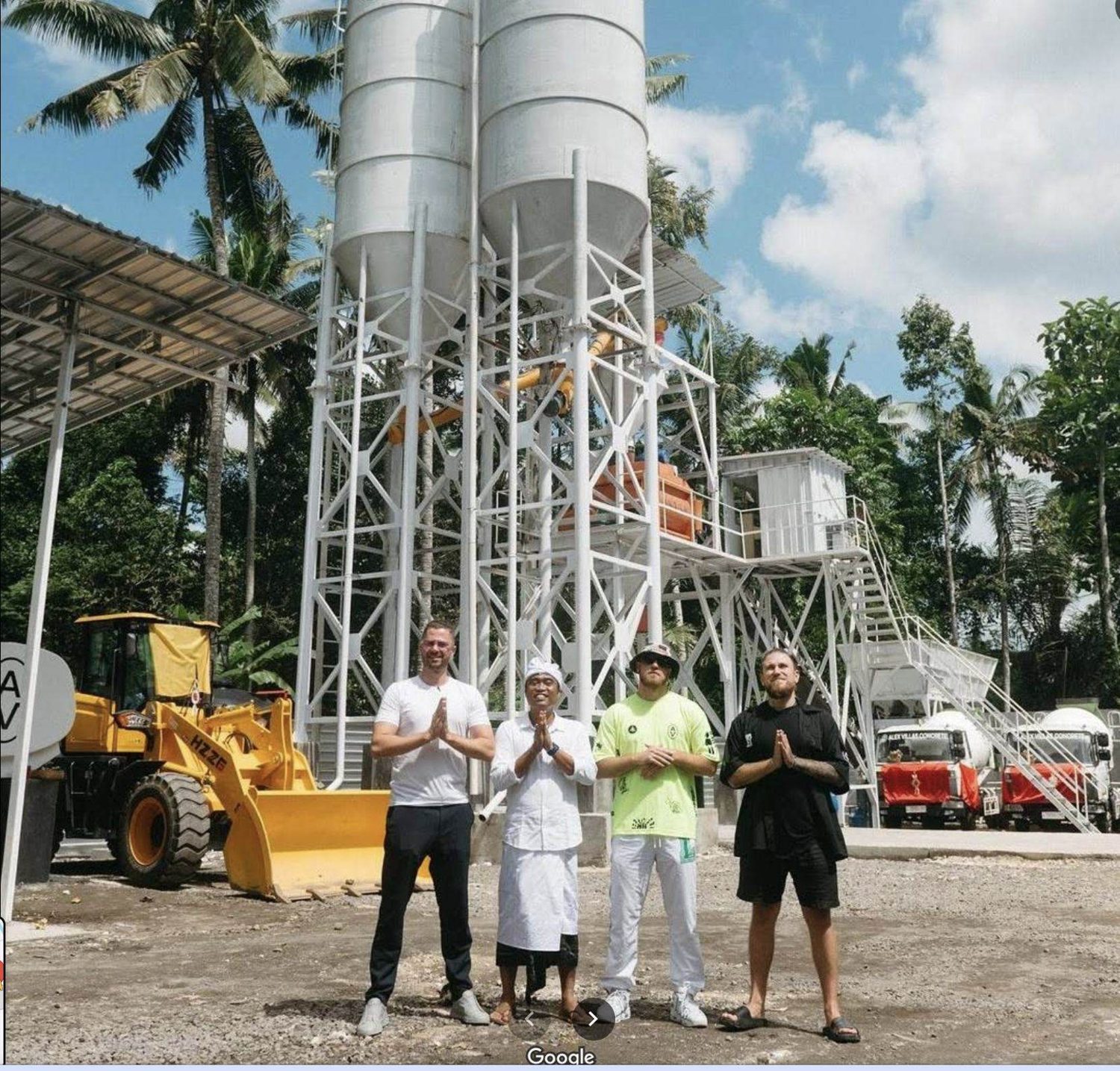
AV Concrete — the group's own batching plant. Concrete arrives to the group's own schedule and specification.

AV Steel — metal structures fabricated in-house, removing one of the longest lead times in Bali construction.
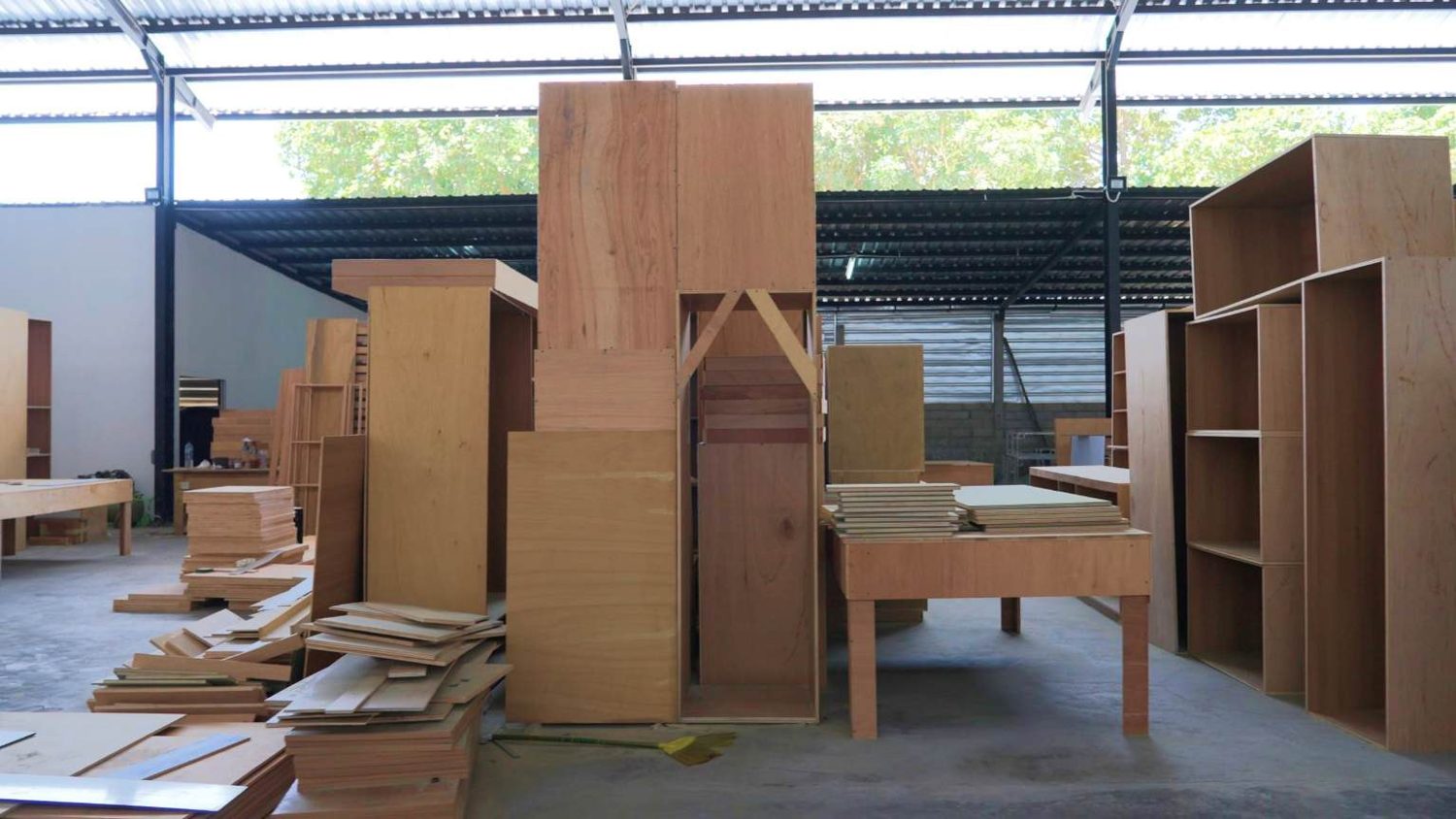
AV Furniture — a furniture workshop that fits out completed units to a single standard, without three-month import waits for a replacement.
The point is control over the two things that decide whether a development is actually delivered: the schedule and the standard.
The team on the ground
The company is run by a permanent Indonesian management team, not by its founder alone.



The Director joined the company in 2017 from the finance team and now oversees operations, finance and service standards. Legal is led by a licensed Indonesian advocate (PERADI) and certified tax lawyer with a Master of Law and more than fifteen years of practice — contracts, permits and client documentation sit there. Day-to-day operations across all complexes are run by a Balinese operations leader who also owns the weekly management reporting.

Recognition and compliance record
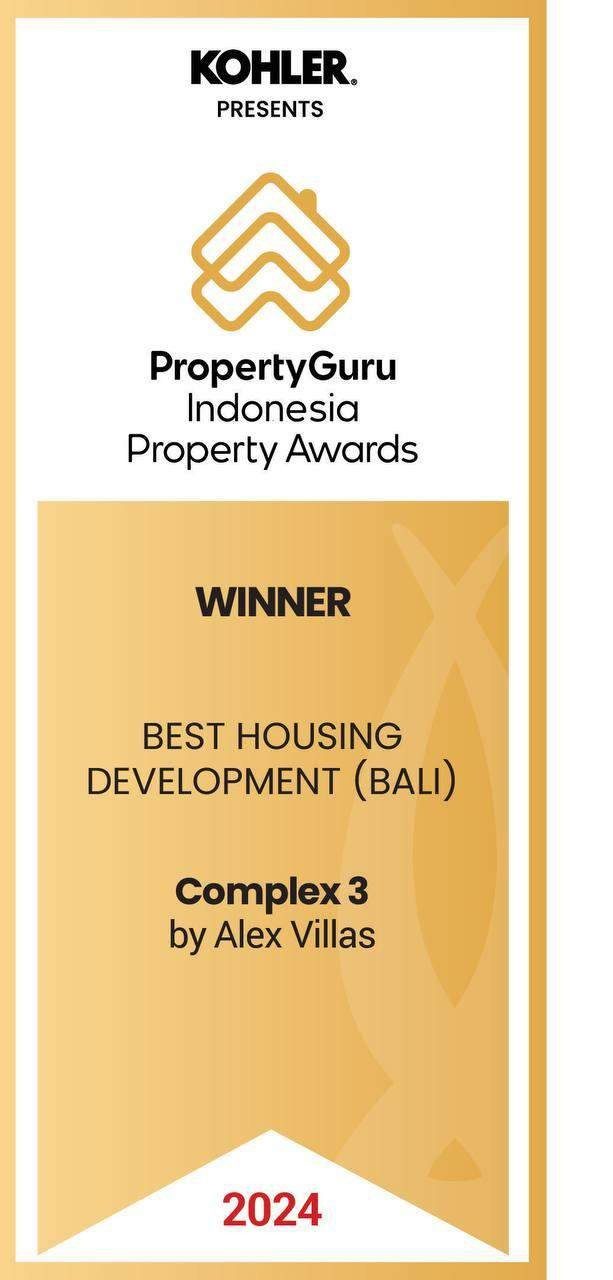
In 2024 the group's projects won three PropertyGuru Indonesia Property Awards, presented by KOHLER: Best Housing Development (Bali) for Complex 3 in Pererenan, Best Investment Residential Development, and Best Residential Architectural Design.
In 2025 the group received a Top-30 Taxpayer Appreciation Certificate in Bali from the Indonesian Directorate General of Taxes (DJP). In a market where the central issue of 2026 is legal formalisation, a tax authority's own recognition is a more useful credential than any marketing claim.
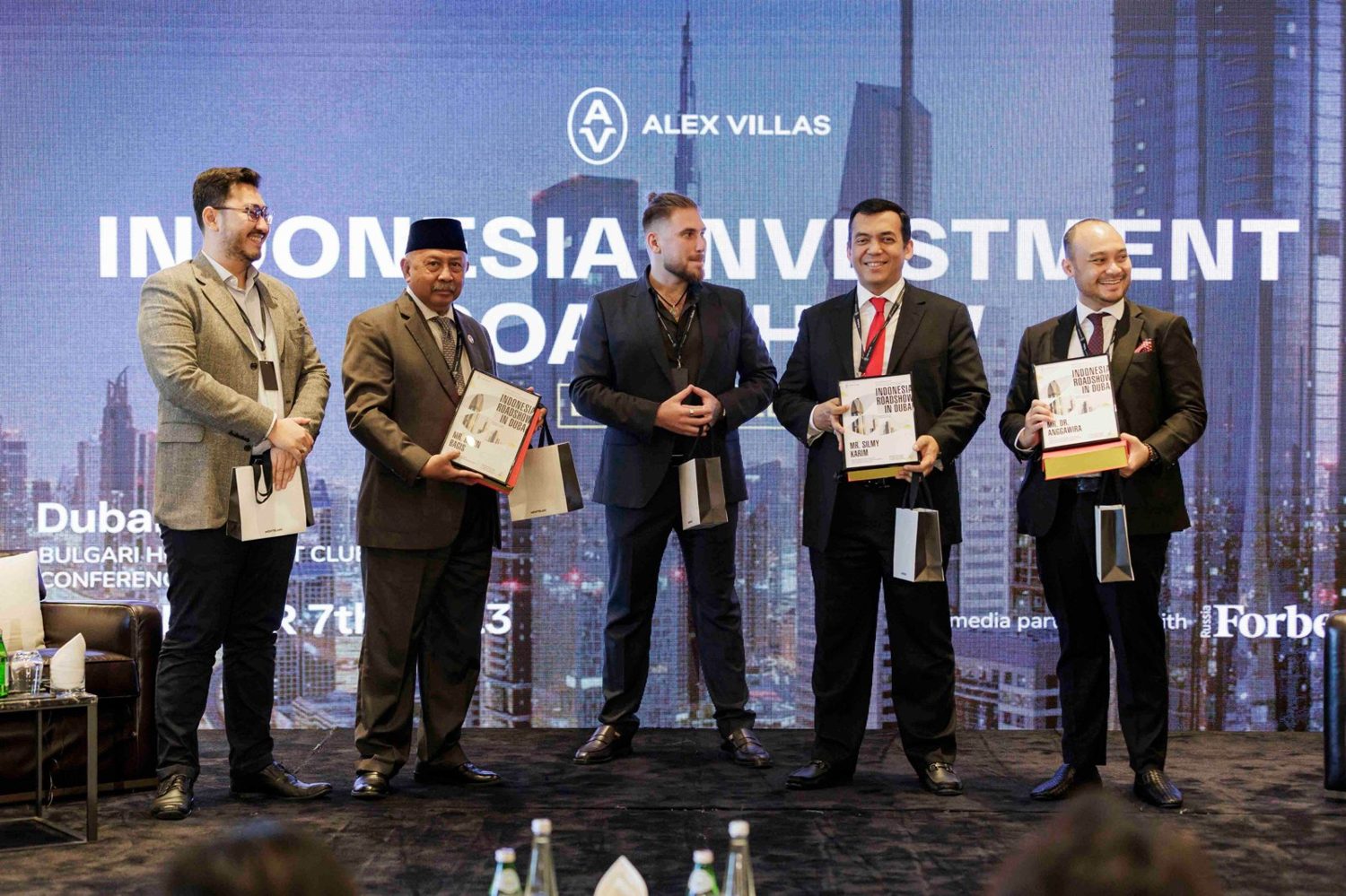
In December 2023 the group took part in the Indonesia Investment Roadshow in Dubai, alongside the Ambassador of the Republic of Indonesia to the UAE and the Director General for Immigration at the Ministry of Justice.
The situation in the company, plainly
The same tightening that will clean up the market also slowed it down. Permitting became longer and stricter — PBG and SLF — inspections increased, and demand cooled after several years of unusually fast growth. Delivery timelines moved across the island, and this group's projects were not an exception.
Decisions were taken early rather than late: costs across the group were cut, new sales of projects under construction were stopped, and resources were concentrated on completing what has already been sold. A new completion date will be named only when it is supported by an issued permit and by confirmed financing — not before.
Bali's frictions are real and worth naming: water availability, waste management and drainage are structural constraints in the most densely developed areas. They are also exactly the reasons the island is moving toward larger, properly engineered and legally formalised projects rather than away from them.
Strategic development
The next stage for the group is a strategic partnership. Talks are under way in several formats; details are not disclosed before binding documents are signed.
What the group brings into such a partnership is not a plan on paper:
a land bank in three locations with proven year-round demand;
projects under way, with permitting documentation obtained or in process;
an in-house construction division and material production — concrete, steel, furniture;
a management platform with more than 200 units already under it and an established guest flow;
a delivery record built over more than ten years, without private equity funds and without bank project financing.
That last point is worth stating plainly: this group grew on its own operations. It is a slower way to build a development business, and a more demanding one — but it means the structure being offered to a partner today was built, not bought.
A message from the founder
In August 2026 Alex Shtefan, founder of Alex Villas Group, recorded a message about the state of the Bali market and of the company. The video is in Russian and runs about eleven minutes.
Contact
If you have a contract with the company, write to the address specified in it — that channel does not change.
For any other question — care@alex.villas.
About this material
This article is informational. It is not an offer, not a proposal to acquire anything, and not a guarantee of any result. Market data is quoted from the Bali Hotel & Branded Residences 2026 report by Horwath HTL and C9 Hotelworks, March 2026. Company figures are the group's own management data as of August 2026. Alex Shtefan is the founder and a shareholder of the Alex Villas group; he is not a director of PT Alex Villas Group.
RESOURCES
Surf the latest Bali real estate trends
High-quality real estate development.